

< blog | Playing With Fire
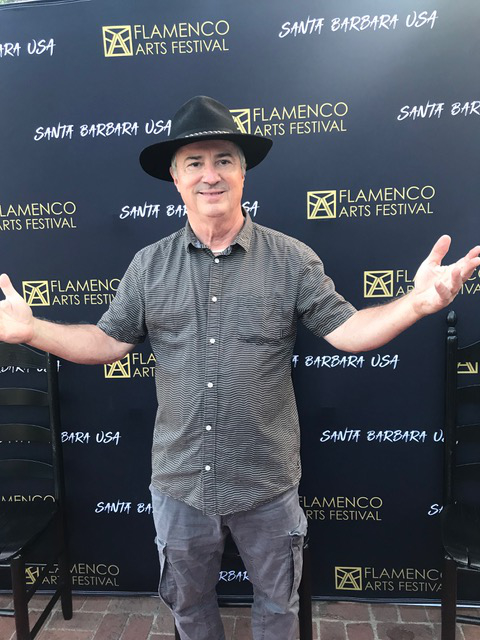
George Quirin.
Playing With Fire
George Quirin on Blues, Flamenco, and Living Inside the Music
Before George Quirin ever stepped onto a stage, music was already humming through his life—spinning on vinyl at home, echoing from concert halls, and quietly shaping a lifelong devotion to sound. A guitarist whose roots stretch from Delta blues to flamenco fire, jazz improvisation to Brazilian rhythm, Quirin’s journey is less about genre than it is about feeling. In this conversation with SYV Buzz, he reflects on early influences, the emotional pull of flamenco, the art of improvisation, and a career built on curiosity, collaboration, and an unwavering belief that music is, at its core, a language of the heart.Early Influences & Musical Roots
SYV Buzz: Can you tell us about the first time a guitar really captivated you?GQ: My passion for music all started with my mother playing records constantly at home. She was playing me all sorts of music; Classical, Broadway show tunes, Big Bands, Swing, Brazilian, everything. I started playing guitar at the age of five.
SYV Buzz: Who were the key artists or teachers that shaped your early musical journey?
GQ: I was immersed in listening to all the Blues and Rock bands growing up John Lee Hooker, Robert Johnson, Muddy Waters, B.B. King, Jimi Hendrix, Led Zeppelin, Cream, Jeff Beck…these were all very guitar-oriented artists. Then my dad took me to see Carlos Montoya when I was seven years old and that opened my ears to a whole new universe…flamenco music.
SYV Buzz: Growing up, what role did culture or community play in the music you gravitated toward?
GQ: Growing up in Santa Barbara I was exposed to pretty much every style of music. I also had four older sisters who went to all the popular rock band shows and brought home posters, albums and excitement of their concert experiences to share with me.
SYV Buzz: You’re primarily a blues-based musician. Can you share with us the path?
GQ: I was self taught for the first ten years of playing guitar and began performing professionally when I was fourteen years old in a Top-40 rock band. After doing that for a couple of years I started studying classical guitar in private lessons and music theory lessons in high school. I started studying jazz with Bill Thrasher when I was 17 years old. After that I learned Brazilian, Latin, and had a great Fusion band in the 80s called “High Tide” for a while. I’ve been in dozens of bands over the years.
Supporting myself playing all these different styles was a lot of fun! I was taking any gigs that came my way, solo Spanish guitar gigs, duo gigs backing up jazz singers, pit bands, jazz big bands, jazz combos, country, more top-40 rock, whatever! I was in a gypsy jazz band, “The Idiomatiques” for eight years around the time you met me. I also started teaching in my 20s and learning recording engineering and production.
Flamenco-style Music & Technique
SYV Buzz: How did you first get introduced to flamenco, and what drew you to it over other styles?GQ: My parents introduced me to some old flamenco at home. Later I heard Paco De Lucia who blew the lid right off of flamenco and modernized it. He changed flamenco and influenced everyone who came after. I was drawn to the emotional quality, rich harmony, rhythmic complexity and challenging guitar technique of flamenco. I find that my attraction to the raw emotion of blues and flamenco is deep and enduring. I’m appreciative of all the world’s ethnic music styles; fado, morna, African, Indian, Brazilian, gamelon, everything!
SYV Buzz: I feel that flamenco is deeply emotional and physical—how do you channel that intensity in your playing?
GQ: I stop thinking and just feel it.
SYV Buzz: Are there particular palos that resonate most with you, and if so, why?
GQ: Of course I love the rumba palos because it was originally African and later was the rhythmic foundation of so much rock and popular music. So the rumba flamenco-style is very easy and natural for me. I had a rumba flamenco-style trio, Ida Y Vuelta that played for a few years in the 90s. I also love the buleria and Alegria palos very much.
SYV Buzz: How do you balance technical mastery with emotional expression when performing live?
GQ: Technique is all about preparation so I don’t really think much about that while performing. I dwell in a more emotional state when performing. Music to me is primarily an emotional language of the heart and soul.
SYV Buzz: Have you ever fused flamenco with other genres in your work, and if so, what excites you about that experimentation?
GQ: Yes, I love to fuse all the styles in my compositions. I think Brazilian and flamenco are particularly exciting to blend.
SYV Buzz: How do you teach or share flamenco techniques with students who may be new to the style?
GQ: It all starts with listening to the music, so I use that to help motivate the student to appreciate and want to learn how to play this challenging style.
SYV Buzz: What advice would you give to someone trying to capture the soul of flamenco on guitar?
GQ: Go live in Andalusia, Spain especially Jerez, or Sevilla (Triana). It’s more than a music style. It’s a lifestyle.
Composition & Creative Process
SYV Buzz: Walk us through your typical process for composing a new piece. Where does inspiration usually come from?GQ: There’s nothing really usual about it. I’m not sure I’ve noticed any process involved, only that there needs to be some sort of feeling or emotion to inspire me. Falling in love seems to work well!
SYV Buzz: Do you start with melody, rhythm, or an emotional concept when writing music?
GQ: Yes, any of those three are a good start.
SYV Buzz: How does improvisation play into your compositions and live performances?
GQ: I view all composition as originally conceived as improvisation…then we remember our inventions and formalize them into repeatable compositions. It’s quite magical really.
SYV Buzz: Are there any unconventional sources of inspiration—like literature, nature, or travel—that has influenced your music?
GQ: Although I do read a lot I’m more inspired by the beauty around us. Of course, nature and travel can be great sources to mine.
SYV Buzz: What role does storytelling play in your music?
GQ: It’s all story telling. I’m taking the audience on a journey…hopefully the listener discovers and experiences something new.
Performance & Audience Connection
SYV Buzz: How do you prepare yourself mentally and emotionally before a performance?GQ: Psyching up for a performance is definitely important. I usually stay calm, focus on the mood that I want to create in the room and just breath.
SYV Buzz: Is there a particular audience or venue that feels most alive to you?
GQ: I love the Santa Barbara Bowl a lot because I have seen so many epic shows there. It’s always exciting when the audience is focused and paying attention to the music. There are definitely different vibes to different audiences.
SYV Buzz: What’s the most memorable live performance you’ve given, and why?
GQ: Oh wow, so many to choose from—it’s hard to narrow it down. I’ve played many concerts if front of thousands of people which is always exciting but some of the most precious memories were one-on-one performances sharing the moment with someone very close to me.
A few of my favorite performance memories are playing with “Gilles Apap And The Transylvanian Mountain Boys” opening for Ray Charles to a packed house at Harman Hall Cal Poly Arts and another show at The Santa Barbara Bowl opening for Jackson Browne. Or when we performed at Strings In The Mountains Music Festival in Steamboat Springs and Peter Gelb showed up backstage saying that he wanted to sign the group to Sony.
Another special memory for me is performing with Michael Mcdonald for a good friends wedding in Hope Ranch years ago.
I am grateful for so many amazing experiences in my life!
SYV Buzz: How do you adapt your playing when performing solo versus with a group?
GQ: It’s always about adapting to the moment and improvising. I don’t seem to think about it much either way. I guess it’s all subliminal at this point.
SYV Buzz: What do you hope audiences walk away feeling after experiencing your music?
GQ: Beauty. Love. Alive.
Collaborations & Cross-Cultural Work
SYV Buzz: You’ve collaborated with musicians across different genres—how do you approach blending styles?GQ: Every situation is different. It starts with choosing the right kind of guitar to compliment the situation. Sometimes it’s an electric rock guitar, sometimes a jazzy or Brazilian or flamenco or classical or an acoustic steel string guitar. That decision pretty much lays the mood stylistically.
SYV Buzz: Can you share a story of a collaboration that surprised you or took an unexpected turn?
GQ: Yes. I met a guy named Bruce Huebner at a local music store who had a quiver of shakuhachi flutes on his shoulder. He was visiting from Japan so I invited him to my recording studio to jam that night for fun…when he arrived I suggested that we could just hit record and see what we improvise freestyle.
What happened was amazing and ended up as a tune entitled “One” on a CD that we released as Tradewinds Pacifica. The CD is called Pelican Bouy. We ended up doing two tours in Indonesia and Japan.
SYV Buzz: How do collaborations influence your own solo work afterward?
GQ: Each collaboration is a unique experience which provides me more devises to use in the future for sure.
Tradewinds Pacifica with Bruce Huebner
SYV Buzz: What was it like blending flamenco guitar with the ethereal tones of the shakuhachi—were there any surprises?GQ: Yes, we were both surprised at how naturally the two instruments fit together! Very complimentary sounds!
SYV Buzz: Did this cross-cultural project inspire you to approach composition differently than usual?
GQ: Yes, both of us being fluent in many different styles, we started blending his traditional Japanese approach with my flamenco guitar approach as well as some Brazilian, jazz standards and ballads as well as some in the kind of “world music” bag.
SYV Buzz: Are there moments from recording or performing Tradewinds Pacifica that still resonate deeply with you?
GQ: Yes, in fact I just listened to the album last night after not hearing it in a long time and I’m still quite proud of those recordings. I know that Bruce agrees that it has some of our best work ever.
SYV Buzz: If you could continue exploring this fusion further, what new directions or sounds would you like to experiment with next?
GQ: Maybe some vocally oriented dance music, r&b, soul, or funk? Whatever opportunities come along, I’m open…what did you have in mind?
From blues-soaked roots and flamenco fire to jazz sophistication and global collaboration, George approaches music as a lifelong dialogue between heart, hands, and human connection. Whether performing for thousands or sharing a single, intimate moment, his intention remains the same: to create beauty, presence, and a sense of aliveness. We’re grateful to George for sharing his story, his philosophy, and his generous spirit with SYV Buzz, and we look forward to wherever his musical journey carries him next.
See our complete list of upcoming music and wine events in the Santa Ynez Valley.
 |
 |
Praise for Dead Reckoning
Local history comes alive.
“A captivating maritime story, both subtle and dramatic.”
—Kirkus Reviews
“A brisk and bracing read.”
—Glen Starkey, New Times San Luis Obispo
“Enjoy this book before it hits the silver screen. With a story so compelling and
cinematic, populated with irresistible characters, it’s destined to become a major motion picture.”
—Terry Rossio, screenwriter, Pirates of the Caribbean
We try to keep our events list as comprehensive and up-to-date as possible, but we encourage you to verify with the artist or venue websites for possible changes or cancellations. Thanks!
Story Archive
- The Best Wines You've Never Heard Of Are Pouring in the Santa Ynez Valley (Here’s Where)
- Kenny Sultan on Stripping Away the Noise and Finding the Note
- When Jazz Meets the Glass
- Chasing Songs, Drivin’, and Loving Every Mile
- Aloha in the Vineyard
- Chris Pierce on Songwriting
- Playing With Fire
- The Show Must Go On
- A Foxen Canyon Classic
- Winery Focus: Koehler Winery
- Songs, Stories, and the Soul of a Small Town
- We Can’t Stop Thinking About Tony Evans Jr.
- Eat, Drink & Be Scary
- The Maybirds Take Flight
- Finding the Lost Chord
- How Randy Hansen Turns a Vineyard Into a “Safe Kind of High”
- Breaking Blues Boundaries: Richiman & Groove Nice’s Global Takeover
- Will Worden: The Troubador Bringing Country Music's Golden Age Back to Life
- From Burgundy to the Santa Rita Hills: Chasing the Perfect Pour
- From Tennessee Trails to Malibu Waves
- Benji Hughes and Jon Lindsay Live at Lost Chord
- The Winemakers are Taking Over the Tavern!
- Stolpman Vineyards’ So Fresh! Garage Takes Over Mattei’s Tavern
- Uncorking Something Rare
- The Sound of Legends
- Why California’s Wines — and Wine Spectator Magazine’s Top 100 — Deserve Your Attention
- The Hidden Impact of Wildfire
- A Lager Lover’s Dream Destination: Lagerville 2024
- Dream Big, Dream Pink!
- Beyond the Bottle
- Savoring Rainy Days: A Unique Wine Tasting Experience
- Musicians talk music with musician Arwen Lewis on the Arwen Lewis Show
- Feast and Festivity
- Ignite the Night
- Heard Through the Grapevine
- Monte Mills: Authentic Cowboy Icon of California's Central Coast
- Brander Vineyard, I have a crush on you
- Cheers to merlot!
- Sip into sunshine
- Carhartt's 2020 Rhone Blend
- Ten reasons why joining a wine club is a journey worth savoring
- What are you scaring up this Halloween?
- This week in the Santa Ynez Valley (September 26)
- This week in the Santa Ynez Valley (September 19)
- This week in the Santa Ynez Valley (September 13)
- This week in the Santa Ynez Valley (September 6)
- Reviving tradition: a journey to exceptional rosé winemaking
- This week in the Santa Ynez Valley (August 29)
- This week in the Santa Ynez Valley (August 22)
- This week in the Santa Ynez Valley (August 16)
- This week in the Santa Ynez Valley (August 11)
- Support the vineyard worker health and wellness fair
- Let's talk about the tip
- Unleash your senses at the Los Olivos Jazz and Olive Festival
- Tegan & Sara live in Solvang CANCELLED